
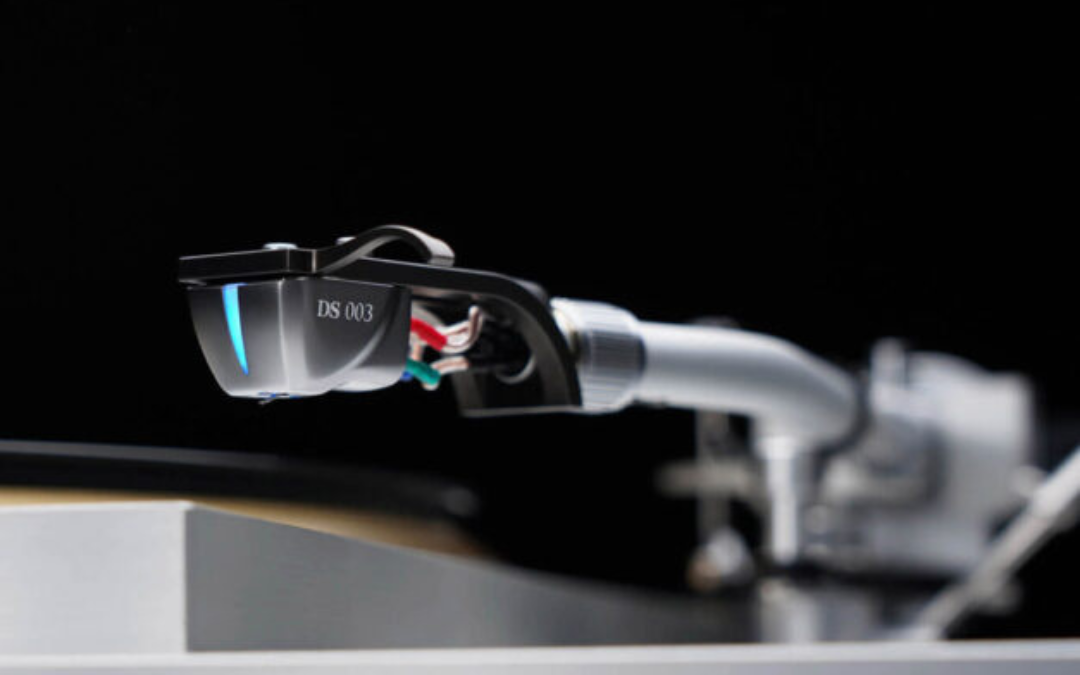
In the world of high-end vinyl playback, meaningful progress is rarely revealed through specifications alone. True differences emerge when products are removed from expectation and reputation, and judged purely by what reaches the listener’s ears.
With this in mind, Hifivestudio in Zeewolde Netherlands, recently hosted a blind listening session comparing two fundamentally different cartridge approaches: traditional moving-iron design from Grado, and optical technology from Japan’s DS Audio.
The Listening Session
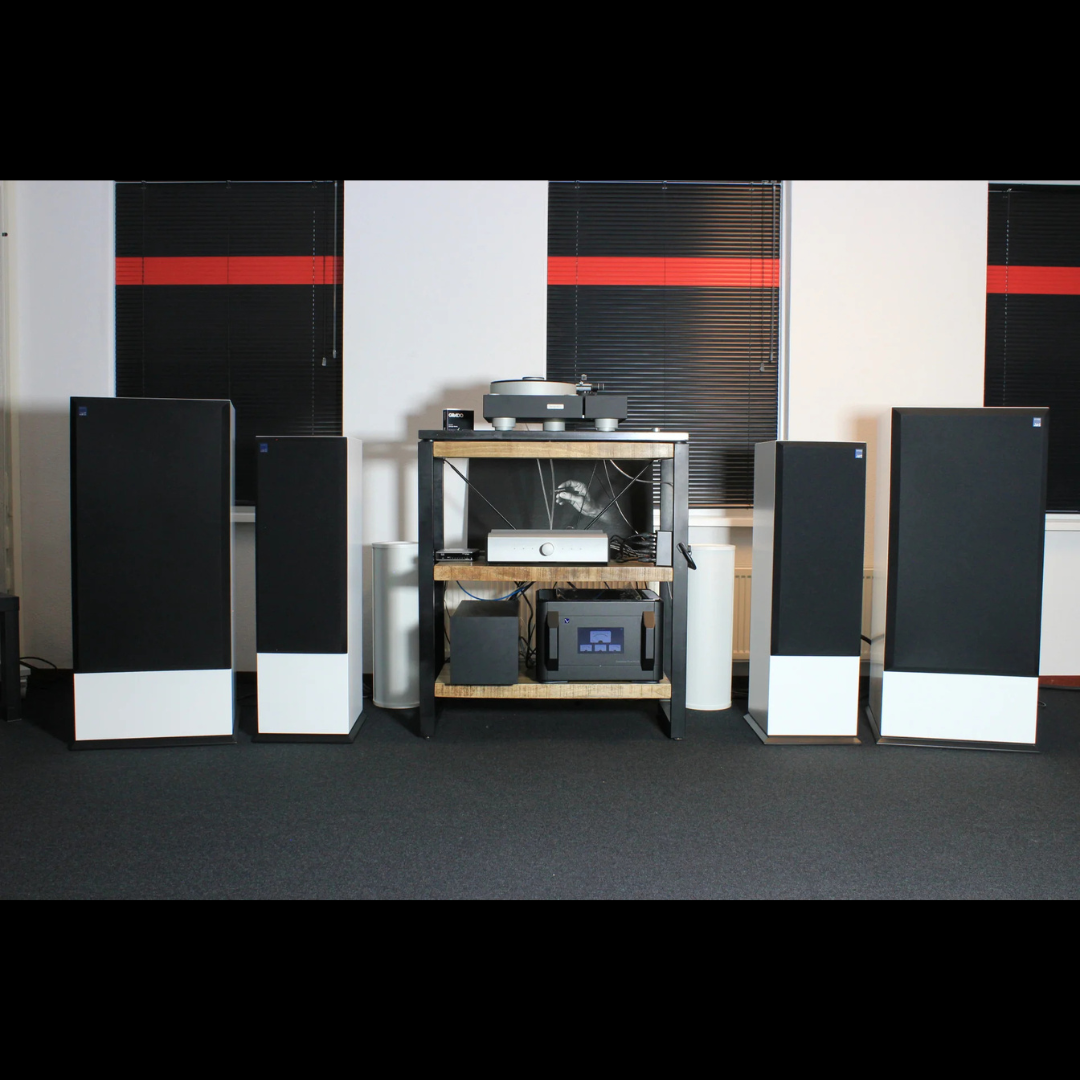
On Thursday, January 15th, a diverse audience gathered at Hifivestudio. The group included journalists, technicians, and experienced customers — not a room of identical “golden ears,” but a realistic cross-section of serious listeners.
The format was deliberately controlled. Each track was played twice per listening block, once with each cartridge, with brand identities concealed throughout. Both cartridges were mounted on the same Bergmann turntable, feeding a Mola Mola preamplifier and a pair of active ATC SCM150A loudspeakers. Aside from the cartridge itself, nothing in the signal chain changed. After each track, attendees recorded which presentation they preferred. The process was repeated across multiple listening sessions, and the results were tallied only after all votes had been cast.
Dutch audio publication Alpha Audio, which reported independently on the event, praised the transparency of the approach: real-world listening, blind conditions, and conclusions driven by collective experience rather than theory.
According to Alpha Audio’s report, the majority of listeners consistently preferred the DS Audio presentation. Following the session, Hifivestudio published further details, noting that an external, impartial panel calculated a final voting ratio of 48 : 11 in favor of DS Audio — nearly five times more selections.
Based on these results, Hifivestudio decided to add DS Audio to its product lineup.
It is important to stress what this outcome does – and does not – represent. This was not a declaration of universal superiority, but a clear preference expressed under blind conditions, using identical equipment, by a mixed audience. That distinction matters.
Why DS Audio Is Different
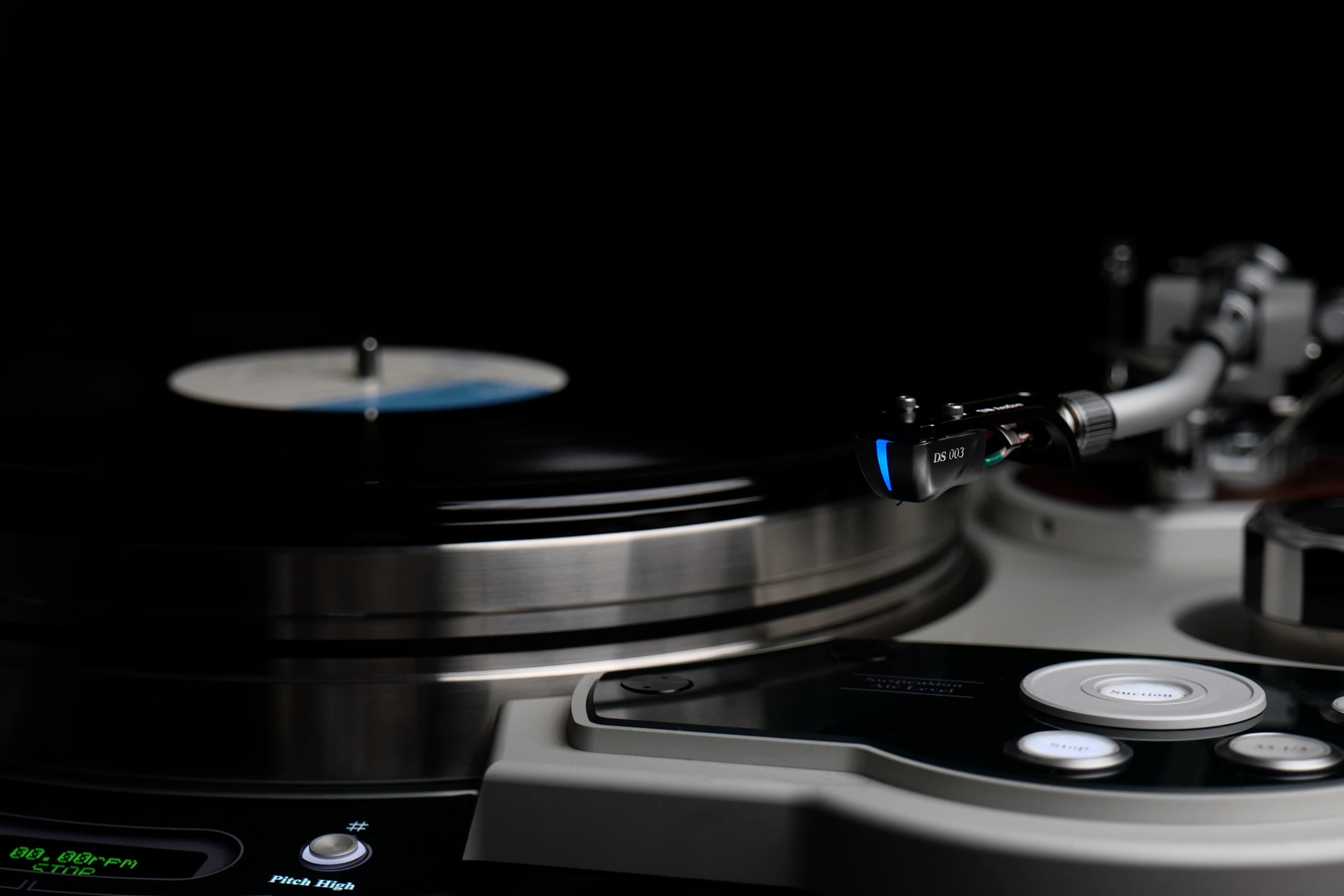
DS Audio approaches vinyl playback from a fundamentally different angle. Instead of converting stylus movement into voltage using coils and magnets, DS Audio employs an optical system: two fixed LEDs, a lightweight moving “shadow plate,” and photodiodes that convert motion directly into an electrical signal.
This design brings several measurable advantages. With no coils or magnets, there is no inductive reactance, no magnetic hysteresis, and no associated phase rotation or smearing. The moving mass is extremely low, allowing the stylus to maintain more precise contact with the groove. Output voltage is significantly higher, requiring far less gain and resulting in lower noise and distortion.
Perhaps most importantly, the optical system is amplitude-proportional rather than speed-proportional, reducing the amount of RIAA equalization required by approximately 28 dB. In practice, this simplifies the signal path and contributes to the sense of calm, control, and clarity repeatedly noted during the listening sessions.
What Listeners Heard
Both cartridges performed at a very high level. This was vinyl playback at its finest, marked by stability, insight, and musical coherence.
The differences lay in emphasis rather than capability. Listeners consistently described the DS Audio presentation as more neutral, open, fast, and controlled. The Grado cartridge, by contrast, was often perceived as slightly sweeter and more romantic. Neither approach is inherently “right” or “wrong”; preference ultimately comes down to taste.
One striking observation was the DS Audio system’s ability to reveal extremely low-level information. In one instance, listeners faintly heard sounds preceding the start of a track. This was later identified as magnetic tape print-through from the original analog master — an artifact normally masked by system noise. Its audibility here was not added detail, but reduced noise.
Analog in a Digital Age
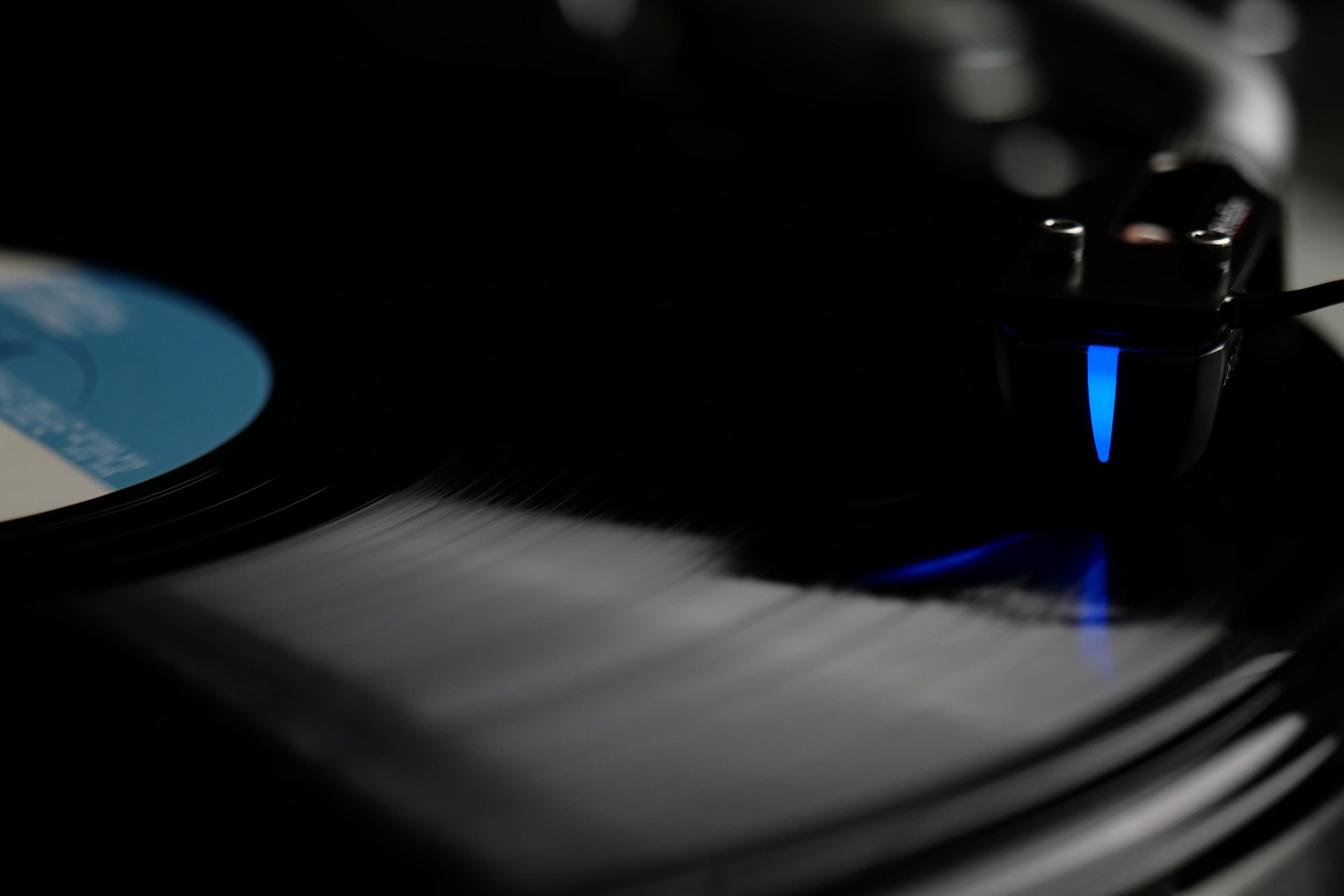
This listening session also raises a broader question. As music production and consumption become increasingly optimized — and as AI-generated content becomes commonplace — why does analog playback remain so compelling?
Perhaps because human beings themselves have not changed. We remain emotionally driven, imperfect, and deeply responsive to presence and ritual. An analog record carries not only sound, but evidence of human decision-making: timing, touch, hesitation, even error. These qualities are physically embedded in the medium.
Listening to vinyl is, by nature, inefficient. It requires attention. It encourages uninterrupted listening. In a world optimized for speed and convenience, that inefficiency becomes a virtue.
Alpha Audio listening report, January 2026; Hifivestudio published results
Hifivestudio & DS Audio: The Significance of an Optical Cartridge
DS Audio Product Line Up
Recent Comments